How Did El Paso Get the Name El Chuco? It’s Not What You Think
How Did El Paso Get the Name El Chuco
El Paso is widely known by the affectionate nickname El Chuco, a name deeply tied to the region’s border culture, zoot suit–wearing Pachuco youth, and possibly even a humble Shoe Co. sign.
For many, the origin begins with the term “Pachuco”—a subculture of Mexican-American youths in the 1930s–40s renowned for their flamboyant zoot suits, love of jazz and swing, and their own slang called Caló. Over time, people began shortening “Pachuco” to “Chuco”, and El Paso became synonymous with the style and identity.
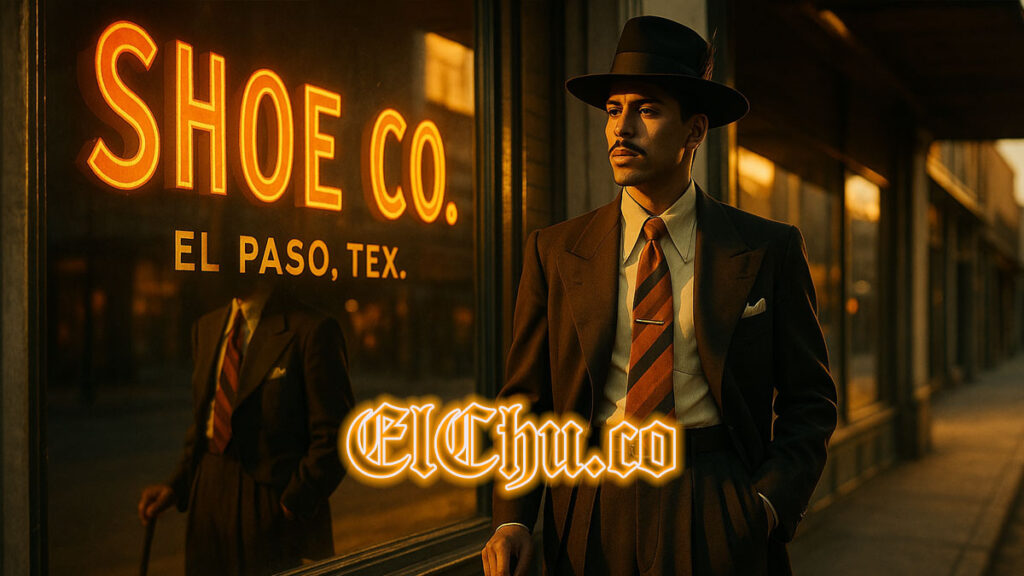
Pachuco or Shoe Co.
| Attribute | Details |
|---|---|
| Nickname | El Chuco (shortened from Pachuco) |
| Subculture | Pachuco – zoot suit, Caló slang, border youth rebellion |
| Geographic Origin | El Paso–Juárez border region |
| Caló Development | 1930s–1940s, mixed Spanish-English slang by Mexican-American youths |
| Alternate Etymology | “Shoe Co.” signage in downtown El Paso—pa’ El Shoe Co. → “pa’ El Chuco” |
| Reference | KLAQ – Why is El Paso Called “Chuco Town”? |
The Pachuco Movement and El Chuco Connection
Pachucos were young Mexican-American men and women who embraced bold style and culture during the 1930s and 1940s. Their signature zoot suits, pompadour hair, and streetwise Caló slang set them apart. They rejected assimilation, instead embracing a vibrant Chicano identity shaped on the U.S.–Mexico border.
The word “Pachuco” itself is debated. Some say it connected to Pachuca, Hidalgo in Mexico; others suggest it came from their border-town roots. In El Paso, it took on a local twist—“Pachuco” shortened to “Chuco”, and the city earned its nickname, “El Chuco” or “Chuco Town”.
Theory #1 – The Zoot Suit Zing
By the 1940s, zoot suits were everywhere in El Paso’s border neighborhoods. These oversized suits, often paired with chain accessories and feathered fedoras, became the hallmark of Pachuco culture—and El Paso was ground zero.
As the Pachuco subculture thrived, so did the slang “Chuco”. Locals would say things like, “Let’s roll over to El Chuco,” celebrating their community’s bold identity. Thus, El Chuco became a loving badge of cultural pride.
Theory #2 – The “Shoe Co.” Sign Legend
An alternative story involves a downtown El Paso Shoe Company. In the 1930s–40s, migrants from Juárez would cross the river and see a building labeled “Shoe Co.”. When asked where they were going, they’d say, “pa’ El Shoe Co.”, which, when spoken quickly, sounded like “pachuco”.
Over time, this phrase seeped into spoken language. Folks began referring to the city simply as “El Chuco”, even as “Shoe Co.” faded into memory. It’s a fun story, but historians argue the Pachuco slang origin is more likely accurate.
Etymology – Which Origin is Real?
While the Shoe Co. theory has charm, most scholars and cultural historians lean toward the Pachuco–zoot suit narrative. They cite the evolution of Caló slang, prideful self-expression, and real identities tied to El Paso rather than a shoe store.
Still, both theories co-exist in local lore. Whether it’s rebellion in style or casual mispronunciation, El Paso’s nickname captures its vibrant history.
What is Caló—and Why It Matters
Caló is the hip, border-born slang used by Pachucos, blending Spanish and English in creative ways. Examples—words like “vato” (guy), “órale” (let’s go) and “wachar” (watch)—became symbols of Chicano identity.
Over time, Caló shaped Chicano cultural expression in literature, film, and everyday speech. And because Pachucos called their city “El Chuco”, the name became layered with cultural weight, not just casual shorthand.
Chuco Town in Pop Culture
- Pachuco Zoot Suits exhibits in El Paso’s cultural festivals show off these sharp outfits.
- Modern “Pachuco Day” celebrations honor zoot suiters and the Fosse-era style in Juárez and El Paso.
- Films like “Zoot Suit” and works by Tin‑Tan, a celebrated Pachuco star, broadcast that swagger across borders.
How El Chuco Still Shapes El Paso Identity
Today, El Chuco isn’t just a throwback phrase—it’s woven into local identity:
- Murals and street art on El Paso walls often display “Chuco Town” in bold fonts.
- The city uses El Chuco branding for festivals, music events, and merchandise.
- Artists, poets, and creators reference the legacy of Chuco when exploring identity, migration, and belonging.
FAQ
Q: Why is El Paso called El Chuco?
A: The nickname “El Chuco” likely comes from local Pachuco culture, slang among zoot suiters in the 1930s–40s who called their city “El Chuco.” A popular backup theory involves a downtown “Shoe Co.” sign.
Q: What does “Pachuco” mean?
A: “Pachuco” refers to the Mexican-American subculture known for stylish zoot suits, jazz and swing music, and Caló slang. The term may derive from Pachuca, Hidalgo, or local border usage.
Q: Is “El Chuco” still used today?
A: Absolutely. El Paso embraces the moniker in art, festivals, branding, and everyday speech as a nod to its cultural roots.
Q: What’s Caló slang?
A: Caló is the slang born from Pachuco culture: a creative mix of Spanish and English. Many words remain part of Chicano speech today.
Q: Are both theories equally accepted?
A: While the Pachuco origin is widely accepted, the Shoe Co. explanation persists as charming local lore. The truth may lie in a lively blend of both narratives.